
How Japan Rebuilt Its Economy After World War II
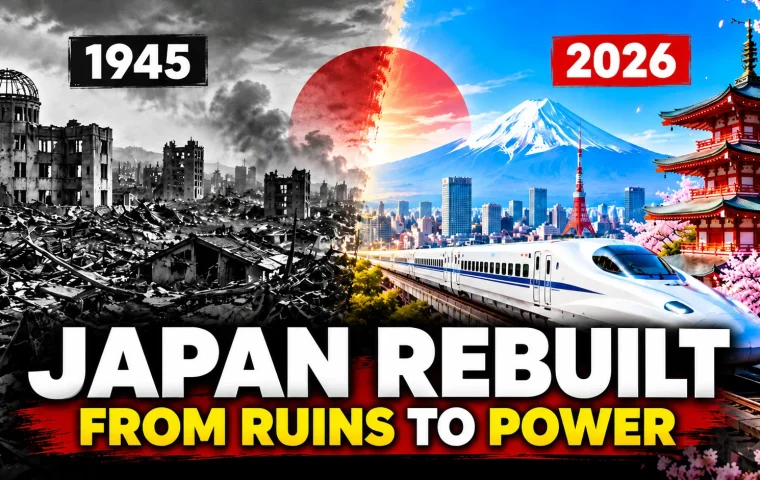
Japan’s recovery after World War II is one of the most remarkable stories in modern economic history. In 1945, the country faced destroyed cities, damaged factories, food shortages, and widespread poverty. Yet, within a few decades, Japan had become one of the world’s leading economies.
How did Japan rebuild its economy after World War II? The answer lies in a combination of economic reforms, American support, the Korean War, investment in education, industrial development, and the growth of Japanese exports.
This transformation is known as the Japanese economic miracle. It shows how a country that suffered enormous destruction rebuilt its industries, improved living standards, and became a global economic power.
Japan’s Economy After World War II
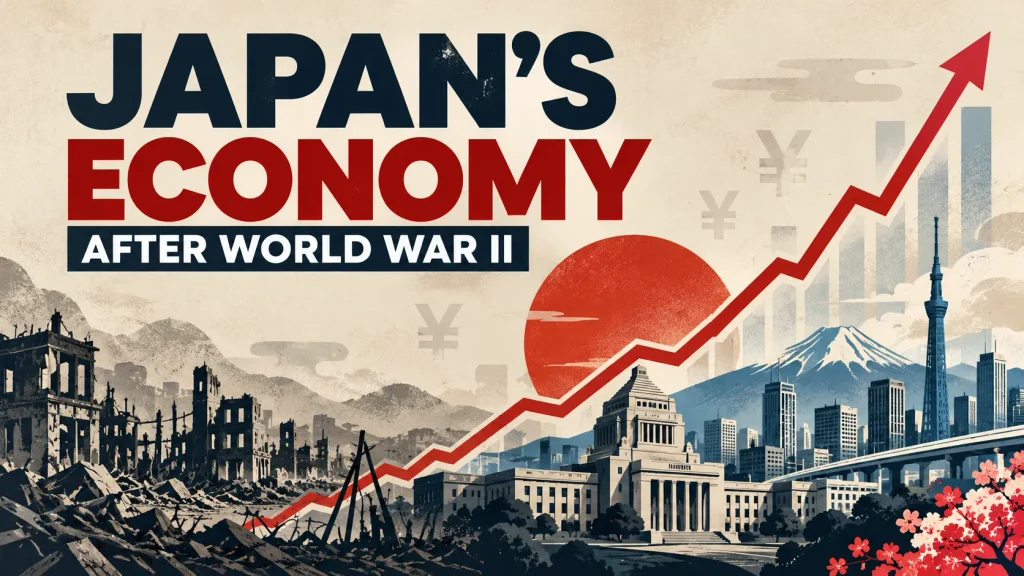
When World War II ended in 1945, Japan was in a difficult position. Years of fighting and Allied bombing had destroyed homes, factories, railways, and other important infrastructure. Hiroshima and Nagasaki had also suffered the devastating effects of atomic bombs.
Millions of people faced housing shortages, unemployment, and limited access to food. Many factories could not operate at full capacity, while businesses struggled to obtain raw materials and restart production.
Japan also faced severe inflation. Prices rose, essential goods were difficult to find, and black markets became common. The government needed to restore economic stability while helping people meet their basic needs.
Rebuilding Japan’s economy required more than repairing damaged buildings. The country needed functioning industries, reliable transport, skilled workers, and a financial system that could support investment.
The challenge was enormous, but the recovery began through a series of economic reforms and changes that gradually restored production and created new opportunities for growth.
1. American Occupation and Economic Reforms
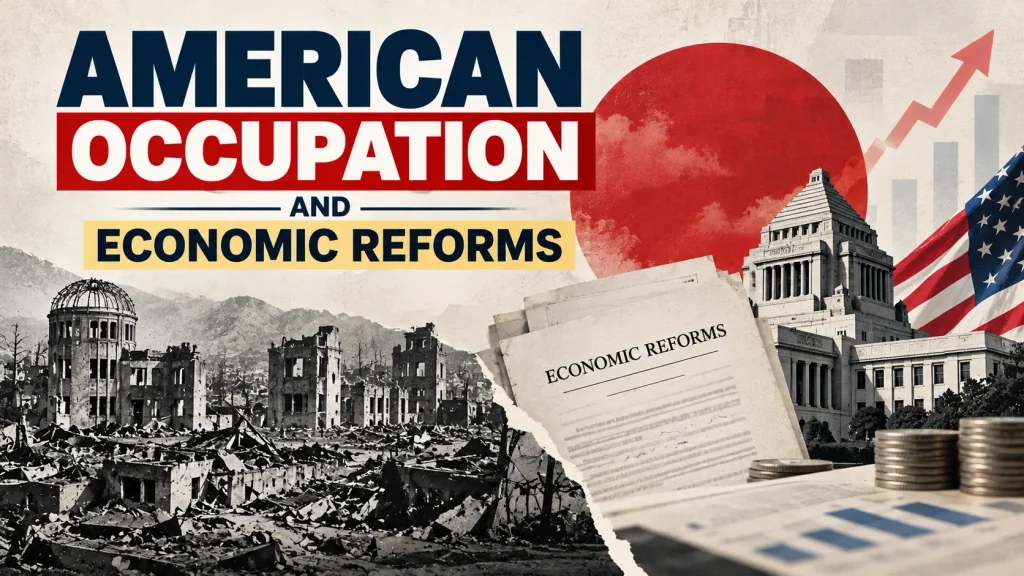
After Japan surrendered in August 1945, the country came under Allied occupation led by the United States. General Douglas MacArthur headed the occupation administration, which introduced major political, social, and economic reforms.
One important change was agricultural land reform. Before the war, many Japanese farmers worked land owned by landlords and paid a large share of their harvest as rent. Postwar reforms transferred much of this land to the farmers who cultivated it.
Land ownership gave many rural families greater control over their income and agricultural production. It also changed the structure of the Japanese countryside.
Economic stabilization was another major priority. In 1949, American financial adviser Joseph Dodge introduced a program known as the Dodge Line. It aimed to control inflation through tighter government spending, financial discipline, and a fixed exchange rate of 360 yen to one US dollar.
These measures helped address Japan’s inflation problem, but they also created short-term difficulties for businesses. Reduced government spending and tighter credit put pressure on companies that were already struggling to survive.
Japan’s economic recovery was therefore not a smooth process. The country needed to control inflation while finding new sources of demand for its products.
That opportunity arrived in 1950, when the Korean War created a sudden increase in demand for Japanese goods and services.
2. How the Korean War Helped Japan’s Economic Recovery
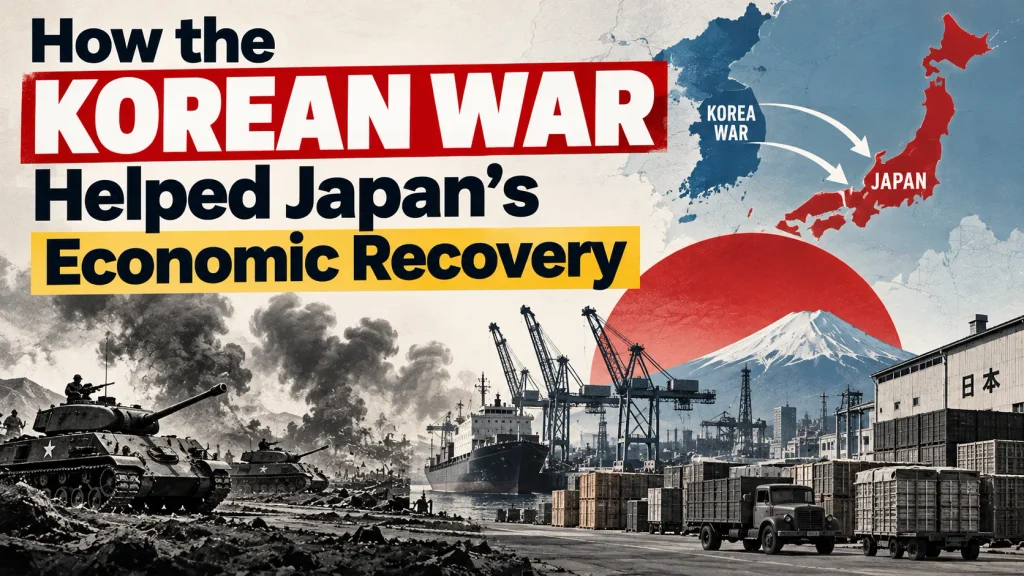
The Korean War began in June 1950, just five years after World War II ended. Japan’s location near the Korean Peninsula made it an important supply base for American forces involved in the conflict.
The US military needed trucks, machinery, uniforms, food, repairs, and other supplies. Japanese companies began receiving large orders, giving factories a reason to increase production and employ more workers.
Toyota provides a clear example of this change. According to the company’s official history, it received orders for 4,679 trucks during the Korean War procurement period, worth ¥3.66 billion. These orders arrived when Toyota was facing serious financial difficulties.
The effect spread across the economy. Factories received new business, suppliers gained customers, and workers earned wages that could be spent on food, housing, and other goods.
This new demand helped Japanese industries restart and expand production. Businesses gained revenue, while the country earned income from supplying goods and services to American forces.
The Korean War became a major turning point in Japan’s postwar economic recovery. However, it was only one part of the story. The country still needed to improve manufacturing, develop better products, and build industries that could compete in international markets after the war ended.
3. How Japan Became an Industrial Power
During the 1950s, Japan moved beyond emergency reconstruction and began developing stronger manufacturing industries. Companies invested in equipment, improved production methods, and worked to produce goods for both domestic and overseas customers.
The automobile and electronics industries became important examples of Japan’s economic development.
Toyota: Improving Quality and Production
Toyota faced serious challenges during the early postwar years. Its finances were under pressure, and its vehicles were not yet ready to compete successfully in every international market.
The Korean War procurement orders gave the company an important boost. But Toyota’s long-term success depended on what it did afterward.
The company continued improving its manufacturing processes, reducing waste, and paying attention to product quality. Over time, these improvements helped Toyota become a major name in the global automobile industry.
Toyota’s development shows that receiving orders can help a business recover, but lasting success requires consistent improvements in production and products.
Sony: Building a Global Electronics Business
Sony began in 1946, when Masaru Ibuka and Akio Morita established a small electronics company in postwar Tokyo.
The company later developed transistor radios that helped introduce Japanese consumer electronics to overseas markets. Its products showed how Japanese businesses could use technical knowledge to create goods for international customers.
Sony’s growth also demonstrated the value of product development and branding. Instead of competing only on price, Japanese electronics companies increasingly focused on making products that customers wanted to buy.
Honda: Expanding Japan’s Automobile Industry
Honda began as a small engineering business under Soichiro Honda and later grew into a major vehicle manufacturer.
Its progress formed part of a wider change in Japan’s manufacturing industry. Japanese companies were learning how to design, produce, and sell vehicles in increasingly competitive markets.
Toyota, Sony, and Honda illustrate the rise of Japanese manufacturing. Their success depended on persistence, but also on skilled workers, technical knowledge, investment, suppliers, and access to growing markets.
4. Education and Technical Skills Supported Japan’s Growth
One major reason behind Japan’s economic growth was its investment in education and technical training.
Factories needed workers who could operate machinery, maintain production systems, and develop new products. Businesses also needed engineers who could improve manufacturing methods and apply new technologies.
Japan expanded education and placed greater attention on science, engineering, and industrial skills. Technical schools and universities helped prepare people for the changing needs of the economy.
As industries expanded, the demand for skilled workers increased. Better-trained employees helped businesses improve productivity, develop products, and produce goods that could compete in international markets.
Education also helped smaller businesses and suppliers. Economic growth required more than a few large companies. It depended on a wider network of manufacturers, technicians, engineers, and service providers.
This connection between education and economic development remains one of the most useful lessons from Japan’s recovery.
A country may have factories and investment capital, but it also needs people with the knowledge to use those resources effectively.
5. Japan’s Income-Doubling Plan
In December 1960, Prime Minister Hayato Ikeda introduced the Income Doubling Plan. Its main goal was to double Japan’s real national income within ten years.
The plan aimed to support economic growth through industrial investment, infrastructure development, education, technological progress, and international trade.
Japan needed better roads, railways, ports, and public facilities to support expanding businesses. Improved infrastructure made it easier to move goods, connect factories with suppliers, and transport workers between cities.
The government also focused on raising living standards and creating employment opportunities. Economic growth was expected to benefit households as well as businesses.
Japan’s economy grew faster than the plan originally anticipated. Rising production, higher incomes, and expanding industrial activity helped the country move closer to the world’s leading economies.
The Income Doubling Plan did not create Japan’s economic miracle on its own. Recovery was already underway during the 1950s. The plan helped build on that progress by setting clear national priorities for continued development.
6. How Exports Helped Japan Become a Global Economic Power
Japan has limited supplies of many natural resources required for manufacturing. It depends on imports for materials such as oil and other industrial inputs.
To pay for these imports, the country needed to earn foreign currency. Exporting manufactured goods became an important part of Japan’s economic development.
Japanese companies expanded their production of cars, electronics, machinery, and other products. As their manufacturing methods improved, they became more competitive in international markets.
Exports helped businesses reach customers beyond Japan. They also brought foreign currency into the country, supporting the purchase of imported resources and industrial equipment.
International competition encouraged companies to improve product quality and control production costs. Japanese manufacturers gradually developed a reputation for producing reliable vehicles, electronics, and industrial goods.
This shift helped Japan move from postwar reconstruction to sustained industrial growth.
The rise of Japanese exports was not simply a result of low prices. Technical skills, production methods, product development, and investment all helped companies compete overseas.
7. How Domestic Savings Supported Economic Growth
Another factor behind Japan’s economic development was the role of household savings.
As employment increased and incomes improved, many Japanese families were able to save part of their earnings. Savings deposited in banks and postal savings institutions helped provide funds for lending and investment.
Businesses needed money to build factories, purchase machinery, develop products, and increase production. The financial system helped direct funds toward these activities.
Domestic savings were not the only source of investment. Business profits, bank lending, and government spending also played important roles. Still, household savings contributed to the financial resources available for economic development.
As companies expanded, they created jobs and paid wages. Rising incomes then supported household spending and further saving.
This relationship between savings, investment, and production helped support Japan’s longer period of economic growth.
8. The Shinkansen and the 1964 Tokyo Olympics
By 1964, Japan’s recovery had become visible to the rest of the world.
On 1 October 1964, the Tokaido Shinkansen began operating between Tokyo and Osaka. It became the world’s first high-speed rail line built for regular passenger service, marking a major achievement in transport engineering.
Nine days later, Tokyo hosted the 1964 Summer Olympics, the first Olympic Games held in Asia.
Both events showed how far Japan had progressed since 1945. The country that had struggled with destroyed infrastructure was now operating a high-speed railway and hosting a major international sporting event.
The Shinkansen also supported economic activity by connecting major cities and making passenger travel faster. Better transport helped people and businesses move between important commercial centres.
The Olympics brought international attention to Japan, while the country’s manufacturing and export industries continued to expand.
These events became symbols of Japan’s recovery, but they were also the result of years of investment, planning, and technical development.
9. When Did Japan Become the World’s Second-Largest Economy?
Japan’s economic growth continued through the 1950s and 1960s. Industrial production expanded, businesses invested in new technology, and exports became an increasingly important source of income.
In 1968, Japan became the world’s second-largest free-market economy, behind the United States.
This achievement reflected the combined effects of postwar reconstruction, economic reforms, Korean War procurement, technical education, infrastructure investment, and manufacturing growth.
Japan’s economy had moved far beyond the emergency conditions of 1945. Its companies were producing goods for international markets, its workforce had developed new skills, and its infrastructure supported a growing industrial economy.
The transformation took more than two decades. There was no single event that made Japan wealthy. Instead, the country gradually built the productive capacity needed to sustain growth.
10. Why Japan’s Economic Growth Eventually Slowed
Japan’s economic miracle did not mean that rapid growth would continue forever.
The 1973 oil crisis increased energy costs and created serious pressure for an economy that relied heavily on imported oil. Japanese businesses had to adjust their production methods and find ways to use energy more efficiently.
Japan continued to develop competitive industries, but the conditions that had supported its earlier rapid growth were changing.
The country later experienced a major asset-price bubble during the late 1980s. When the bubble collapsed in the early 1990s, Japan faced financial problems and a prolonged period of weak economic growth.
These developments show that even successful economies face new challenges as their industries and financial systems change.
Understanding Japan’s later economic difficulties gives a more complete picture of its history. The country’s postwar recovery was remarkable, but its experience also shows that maintaining growth requires continued adaptation.
Lessons From Japan’s Economic Miracle
Japan’s economic recovery offers several lessons for countries working toward long-term development.
Education and technical training can help build the skilled workforce needed for industrial growth. Infrastructure can make it easier for businesses to produce and transport goods. Stable economic policies can support investment, while international trade can help companies reach larger markets.
Japan’s experience also shows the value of preparation. The Korean War created a sudden increase in demand, but Japanese companies needed factories, workers, suppliers, and production capabilities to benefit from those orders.
The country’s later success depended on turning that temporary opportunity into lasting industrial development.
Japan’s rise was not the result of hard work alone. It came from the interaction of government policy, private enterprise, education, investment, and international demand.
Frequently Asked Questions
How did Japan rebuild its economy after World War II?
Japan rebuilt its economy through economic reforms, American support, Korean War procurement, investment in education and infrastructure, industrial development, and export growth.
Why is Japan’s recovery called the Japanese economic miracle?
The term refers to Japan’s rapid economic growth after World War II, particularly during the 1950s, 1960s, and early 1970s. The country moved from severe wartime destruction to becoming one of the world’s largest economies.
How did the Korean War help Japan’s economy?
The Korean War created demand for trucks, machinery, clothing, repairs, and other supplies. Orders from American forces helped Japanese factories increase production and supported employment and business recovery.
What role did Toyota and Sony play in Japan’s economic growth?
Toyota helped demonstrate the development of Japan’s automobile manufacturing industry, while Sony became an important example of the country’s growing electronics sector. Both companies benefited from technical development, investment, and access to international markets.
When did Japan become the world’s second-largest economy?
Japan became the world’s second-largest free-market economy in 1968, behind the United States.
Why did Japan’s economic growth slow down?
The 1973 oil crisis increased costs for Japanese businesses. Later, the collapse of the asset-price bubble in the early 1990s contributed to a prolonged period of weak growth and financial difficulty.
Conclusion
Japan’s recovery after World War II was a long process built on economic reforms, industrial development, education, infrastructure, and international trade.
The Korean War gave Japanese businesses an important early opportunity to restart production. But the country’s longer-term growth depended on improving manufacturing, developing skilled workers, investing in infrastructure, and building competitive export industries.
The Japanese economic miracle shows that lasting economic progress requires more than a temporary boost. It depends on the ability to turn opportunities into productive capacity and continue improving over time.


Leave a Reply
You must be logged in to post a comment.